
Small-Space Food Storage for an Emergency Pantry
Build a pantry on one shelf. Choose safe storage, keep heavy items within reach, and leave room for food you use and water you can lift.
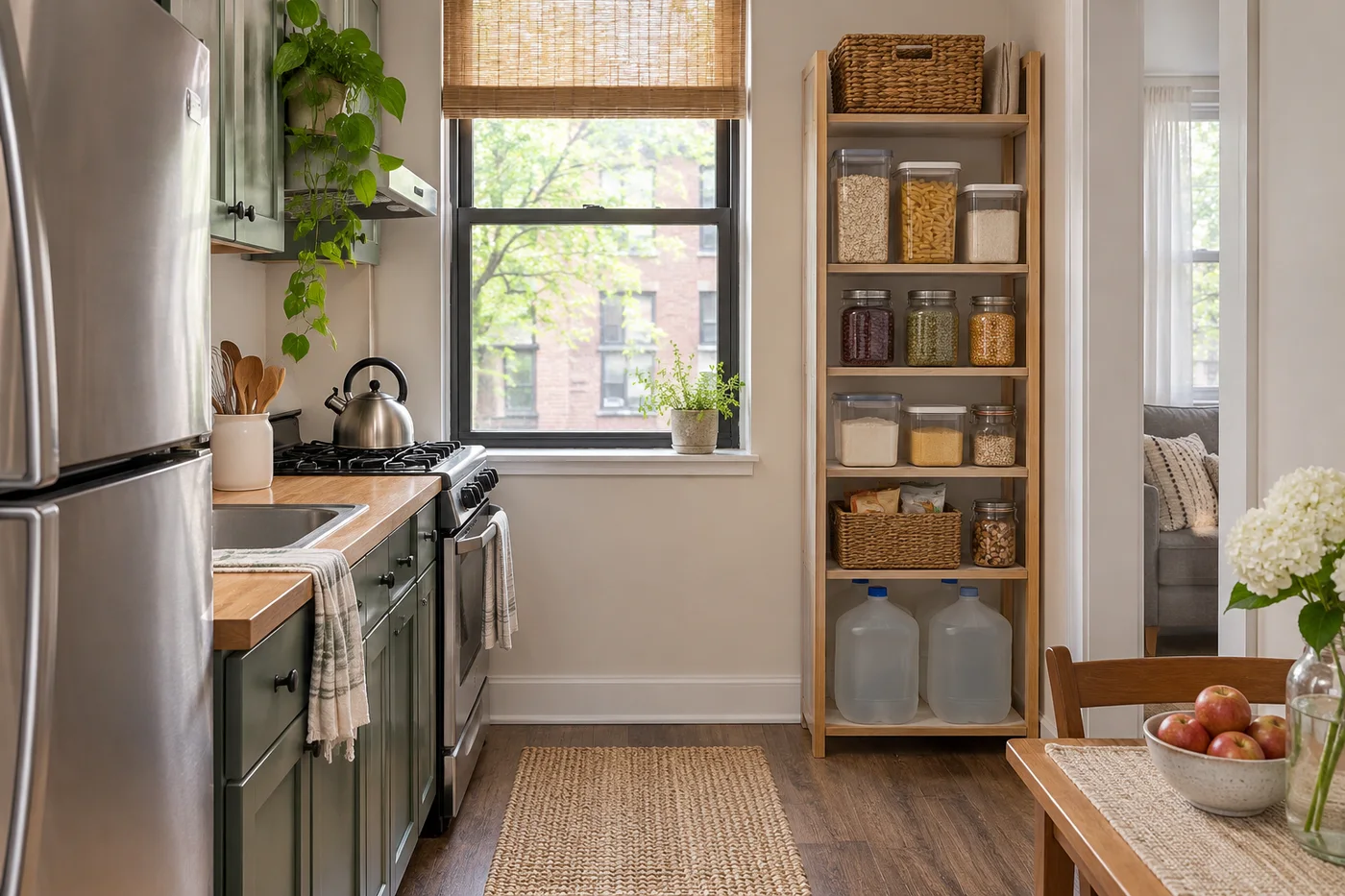
Start with one cool, dry shelf you can reach. Measure it and check how much weight it can hold. Stock a few meals before buying bins or more shelving. Keep heavy items low and leave your exits clear. You need to be able to find and use what you store.
You may have room for another shelf but no budget to fill it. Or you may have the budget and no easy way to carry a heavy case upstairs. Work with the space, money and strength you have.
Measure before shopping for organizers
Measure the shelf’s width, depth, and usable height. Allow room for the door and hinges. A bin that fits an empty cabinet can still be awkward once you need to lift it out full.
Try an existing tray or box before buying a set. Group items by meals or by the way you shop: breakfast foods together, canned beans, fish or meat together, or all the ingredients for a familiar dinner in one section.
Keep heavy containers low and within comfortable reach. Follow the shelving manufacturer’s load limits and installation instructions. Don’t block an exit or put a tall, unstable stack beside a bed.
Use indoor storage that suits the food
USDA recommends a cool, dry place for commercially canned foods. That makes a hot balcony or damp storage corner a poor substitute for a kitchen shelf. USDA storage guidance.
Think about access as well as available space. If moving a mattress is the only way to reach breakfast supplies, rotation will be a chore. Under-bed storage may work for an occasional reserve if the location is suitable, but keep the food you use weekly close to the kitchen.
Buy a package you can finish
Compare a big package’s lower unit price with the storage it needs after opening. Compare the savings with the space it occupies and the amount you can use.
Leave some room for water. Work out where a container will sit and whether the person who needs it can lift or pour it. CDC recommends food-grade containers for water you store yourself. CDC container guidance.
Printable shelf plan
- Measured the shelf and door clearance.
- Checked shelf load and installation instructions.
- Chosen a cool, dry location suitable for the food.
- Kept exits and walking routes clear.
- Tested an existing container before buying organizers.
- Allowed access to the oldest stock.
- Found a place where we can reach and use the water.
Take a photo of the finished shelf and keep it with your shopping list. You can check what fits while you’re standing in the store instead of guessing.
Storage gear for tight spaces
Measure the shelf before buying organizers. Pick equipment that gives food a usable home and leaves room to reach it.
We may earn a commission from these links, at no extra cost to you. As an Amazon Associate I earn from qualifying purchases.
Organize canned food
Fit dry staples to the shelf
Sources
Frequently asked questions
- Where should I keep canned food?
- USDA recommends a cool, dry place. Use a shelf that meets the food’s label directions, supports the weight, and lets you reach older food easily.
Save this article to Pinterest
 Pin this image →