
No-Cook Emergency Meals for Power Outages
Put together meals you can eat when the power is out. Includes food ideas, a printable menu, and storage and cleanup tips.
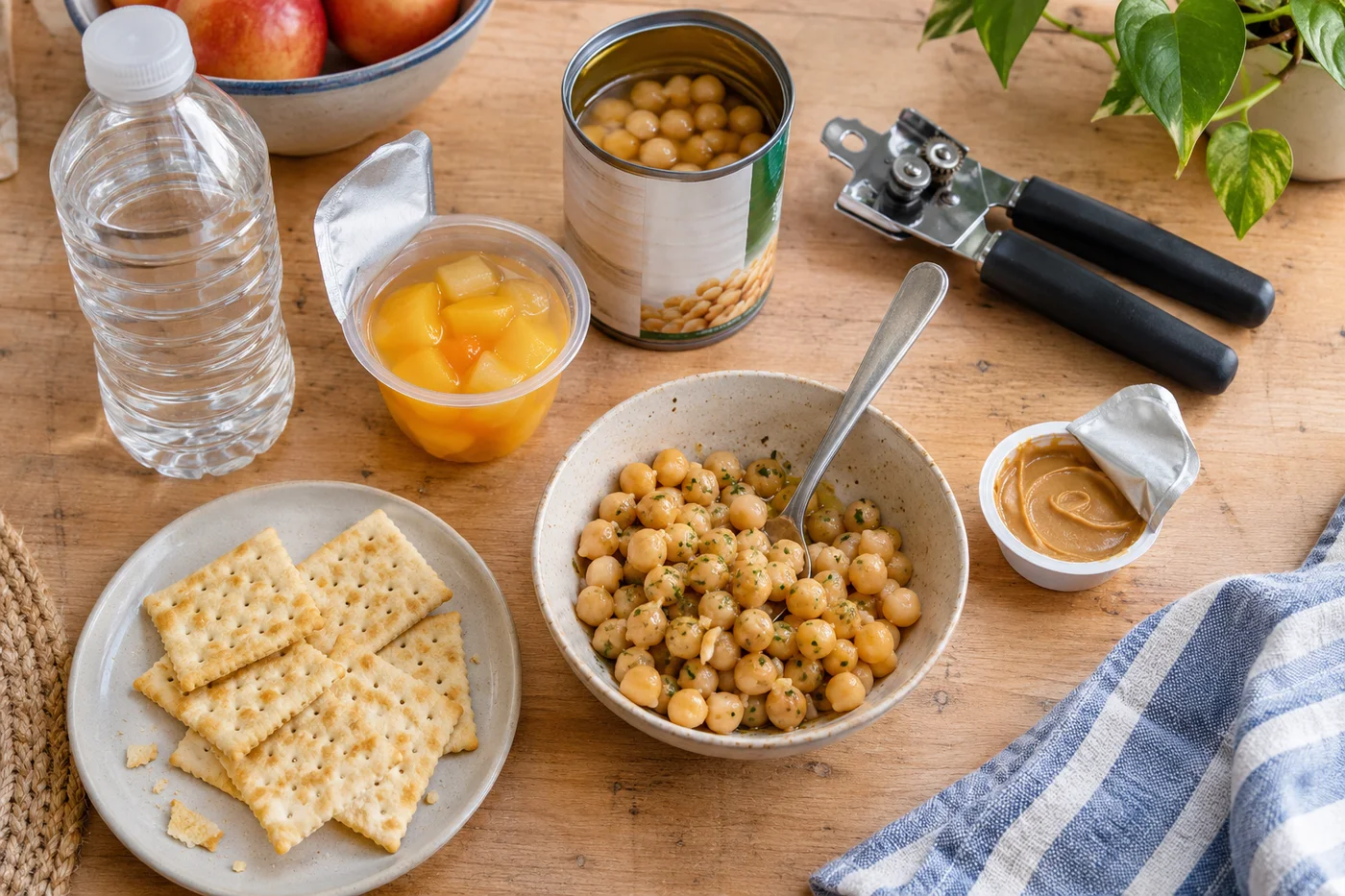
Keep a few meals you can eat when the stove and microwave won’t work. Choose foods labeled ready to eat, check for allergies, and pick packages you can finish without saving leftovers. Add drinking water and a manual opener. Try one of those meals now, while changing the menu is easy.
Use a planned lunch on an ordinary day. Was it enough food? Could everyone open the packages? Would they eat it again?
Build meals from ready-to-eat packages
Possible combinations include ready-to-eat canned beans with crackers and fruit, a nut or seed spread with suitable bread or crackers, or a ready-to-eat protein pouch with vegetables and a familiar snack. Choose amounts and foods that suit the people eating them. Follow any medical diet they’ve been given.
Read the package. Some foods need cooking; others are ready to eat but require refrigeration after opening. Choose portions your household can finish safely. Include an opener if the package needs one.
Include meals that children and anyone on a special diet can eat. Check ingredients and allergy warnings on each package. A familiar brand can have different ingredients in another variety.
Plan the cleanup too
Keep drinking water, clean utensils, handwashing supplies, and a way to collect trash with the meal supplies. Keep what you need to open and serve each meal with the food.
Don’t add an indoor camp-stove setup to make the menu work. Follow appliance instructions and local emergency guidance; outdoor cooking equipment must not be used inside a home or garage.
Keep questionable refrigerator food out of the plan
FoodSafety.gov says an unopened refrigerator can keep food safe for up to four hours without power. Its guidance calls for discarding refrigerated perishables such as meat, eggs, and leftovers after four hours without power; use its item-by-item chart for details. Never taste food to judge safety. Power-outage food chart.
Keep enough ready-to-eat food for the meals you’re planning. You may have to throw away food from the fridge.
Printable one-day menu
| Meal | Food and amount | Opener needed? | What happens after opening? |
|---|---|---|---|
| Breakfast | ___ | ___ | ___ |
| Lunch | ___ | ___ | ___ |
| Dinner | ___ | ___ | ___ |
| Snacks | ___ | ___ | ___ |
- Every food is labeled ready to eat or needs no cooking.
- Ingredients suit everyone who will eat the meal.
- Package sizes don’t depend on storing leftovers.
- Water, utensils, and cleanup supplies are available.
- The household has tried the menu.
After the trial, replace the foods nobody ate. Keep a copy of the menu beside the supplies so someone else can find and serve them.
Manual can openers: good, better, best
Choose the opener that fits your grip and the way you use the kitchen.
We may earn a commission from these links, at no extra cost to you. As an Amazon Associate I earn from qualifying purchases.
Good — basic pantry tool
Better — cushioned grip
Best — side-cutting design
Sources
Frequently asked questions
- How should I choose package sizes for an outage?
- Choose amounts your family can finish at one meal. Follow the label after opening; many foods need refrigeration once opened.
Save this article to Pinterest
 Pin this image →