
Prepping on a Budget: Build Your Emergency Food Supply
Start a backup pantry one grocery trip at a time. Finish buying meals you already have partly stocked and set a spending limit that fits your budget.
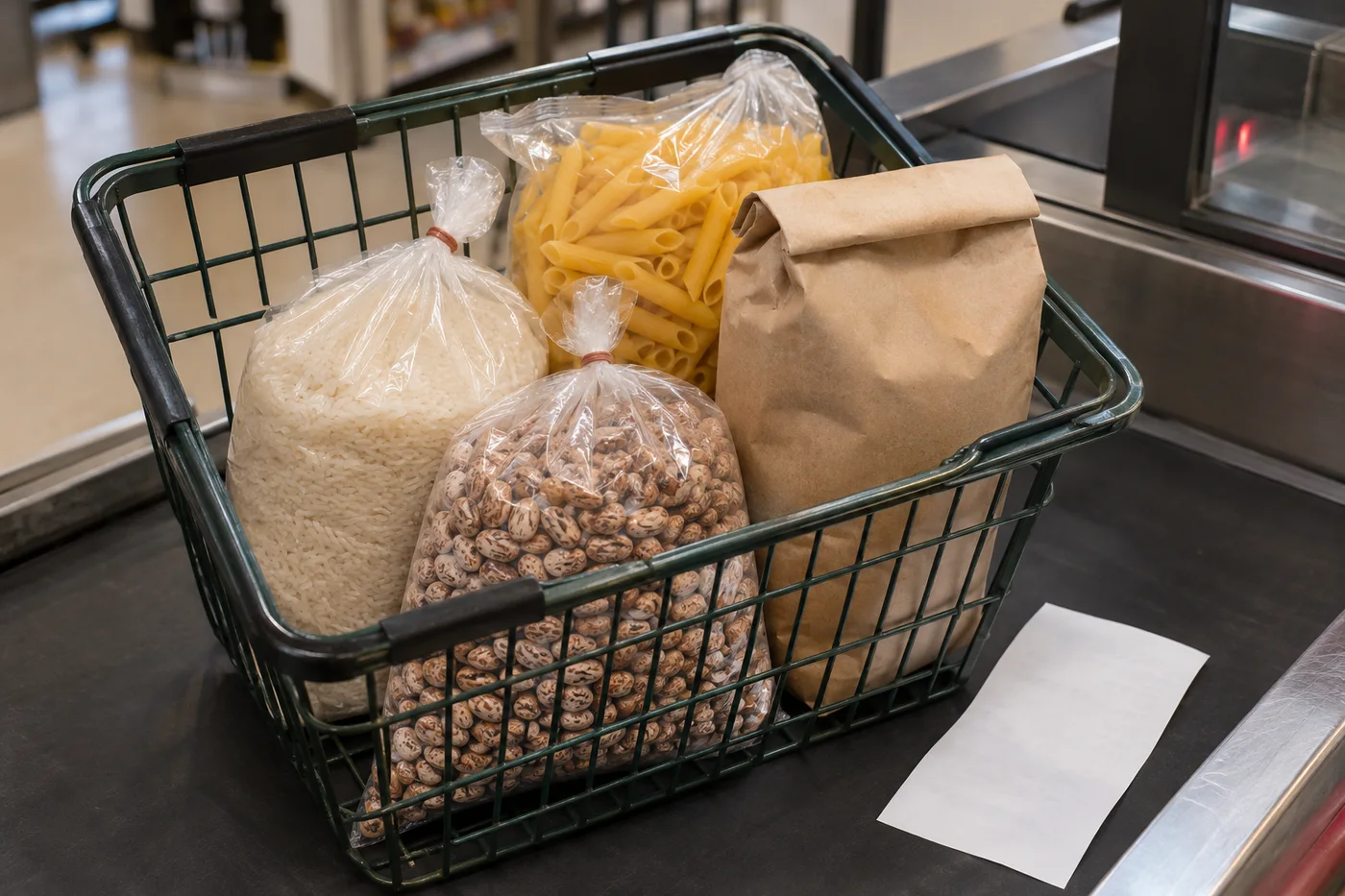
You can start a backup pantry with one extra item on a grocery trip. Look for a meal you almost have: rice that needs beans, or pasta that needs sauce. Buy the missing piece when you can afford it. If this week’s money is already spoken for, just count what’s on the shelf.
Keep money for rent, medicine, and other essentials available. If there’s nothing left for extra food this week, use the time to count what you already have.
Find the cheapest unfinished meal
Look at what is already in the kitchen. Perhaps you have pasta and vegetables but no sauce. Or rice and seasonings but no beans. Write down the missing item and its likely cost.
Choose one or two meals you can complete with a small purchase. Update the same list each payday.
| Meal | Already have | Missing | Store price |
|---|---|---|---|
| ___ | ___ | ___ | ___ |
| ___ | ___ | ___ | ___ |
Set a limit for extras
Decide how much, if anything, you can add on this grocery trip. You don’t have to spend a set amount every week. If the regular shop costs more than expected, skip the extras.
Don’t treat an advertised bulk discount as a deadline. Compare unit prices for food you’ll use, then look at the total amount leaving your account. A smaller package may be the workable choice this week.
Keep some money for bills as well as food. The CFPB describes emergency savings as money for unexpected expenses; groceries can’t pay a utility bill. Emergency-fund guidance.
Test a substitute once
Before stocking a cheaper brand or a new staple, use it in a normal meal. Note whether it worked and how many people it fed. Do the same with an unfamiliar cooking method. Dry beans and ready-to-eat beans solve different problems when time, water, or power is limited.
Avoid buying containers until a specific storage problem appears. The packaging food came in may already suit unopened storage; follow its directions. A label and a pencil cost less than rebuilding the pantry around a matching set of jars.
Printable grocery-budget check
- Regular household needs are covered first.
- This trip’s limit for extra food is $____.
- The purchase completes a meal we eat.
- We can use and store the quantity before buying more.
- A new substitute has been tried once.
- The receipt is saved for the next price comparison.
If a paycheck stops, use the food you’ve put away. That’s what it’s there for. Write down what you use, and rebuild gradually when the budget allows.
Buy the basics first
Put your money toward familiar food and stored water. A manual opener and a refillable water container cover useful jobs without a large kit purchase.
We may earn a commission from these links, at no extra cost to you. As an Amazon Associate I earn from qualifying purchases.
Basic pantry tool
Reusable water storage
Sources
Watch and learn
7 Creative Ways to Build a 3 Month Food Supply
Frequently asked questions
- When does buying in bulk make sense?
- Buy in bulk when you can afford the full price, store the food properly, and use the amount you buy. Try a new food in one meal before stocking up.
Save this article to Pinterest
 Pin this image →