
Bare-bones budget worksheet for a drop in income
Work out which bills to cover when income drops. This printable budget sheet includes due dates and an example of how long savings could last.
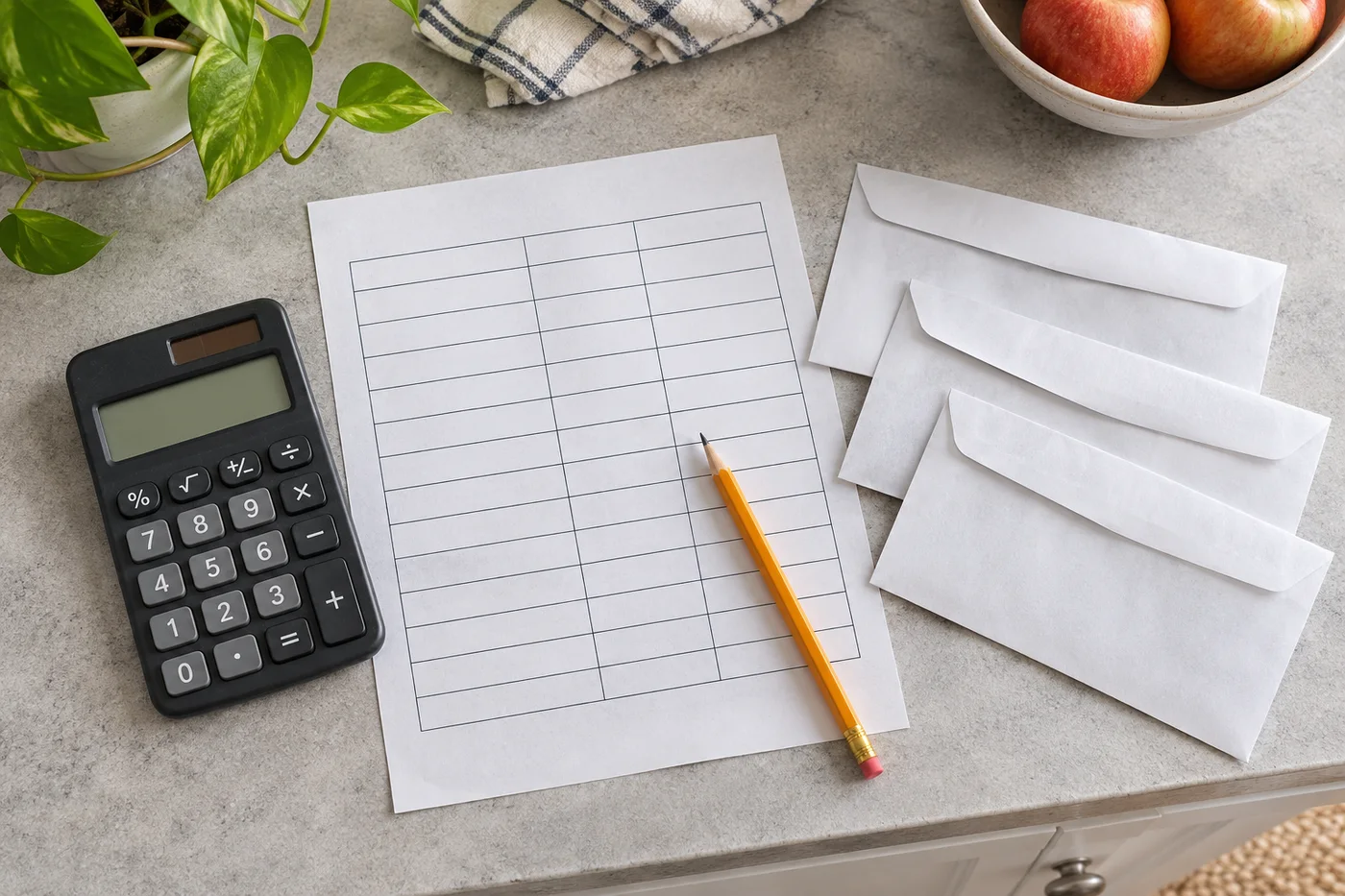
A bare-bones budget shows what you still need to pay when income drops. Write down the cost of housing, food, medicine, utilities, insurance and other bills you must cover. Add due dates. Compare that list with money you know is coming in, then work out the shortfall.
Use recent statements to list the month’s costs. Use the amount your household needs now, even when it’s higher than you hoped.
Separate essential costs from expenses you can change
List housing, food, utilities, care, transport, insurance, and required payments. Check each bill on its own. The Consumer Financial Protection Bureau (CFPB) has a worksheet to help you decide which bills need attention first. Think about what happens if each one goes unpaid, such as losing your home or your ride to work. Prioritizing bills.
Put optional spending in another section. Decide what is essential based on how your family uses it. Internet, for example, may be needed for work, school, or an application.
| Expense | Due date | Amount this month | Can change now? | Next action |
|---|---|---|---|---|
| Housing | ___ | ___ | ___ | ___ |
| Utilities and communication | ___ | ___ | ___ | ___ |
| Food and household supplies | ___ | ___ | ___ | ___ |
| Transport and care | ___ | ___ | ___ | ___ |
| Insurance and required payments | ___ | ___ | ___ | ___ |
| Irregular bill | ___ | ___ | ___ | ___ |
Check the calendar for uneven costs
Look ahead for car registration, annual subscriptions, insurance renewals, and school expenses. A monthly average can hide a large payment due next Tuesday.
Keep both a monthly total and a dated list of upcoming payments. The total helps compare options. The dates show whether the account will have enough money when a bill arrives.
Work out how long the cash might last
Here is a made-up example to show the math: $4,000 of available cash, $2,800 of monthly essential spending, and $800 of confirmed monthly income leave a $2,000 monthly gap. Dividing $4,000 by $2,000 gives roughly two months.
Use confirmed income and cash available for bills in this calculation. Allow for costs that change and larger bills coming due. Check the payment calendar even when monthly income covers the total.
Printable budget check
- Used statements and current bills.
- Included care, prescriptions, pets, and transport.
- Checked irregular payments coming due.
- Separated confirmed income from possible income.
- Left out money already needed for other bills.
- Assigned a date to review the plan again.
After the first week, replace estimates with actual spending. If groceries cost more than expected, change that row and check which upcoming payments the difference affects.
Useful gear for this job
Use what you already own, then fill the gaps that matter for this plan.
We may earn a commission from these links, at no extra cost to you. As an Amazon Associate I earn from qualifying purchases.
| Pick | Product and why it fits | Amazon |
|---|---|---|
| Bill calculations | Casio MS-80B Desktop Calculator — A desk calculator for checking bills, totals and job costs. Details | Find on Amazon |
| Monthly worksheets | Avery Durable View Binder, 1-inch — Holds printed worksheets and household instructions together. Details | Find on Amazon |
Sources
Frequently asked questions
- How do I estimate how long my savings will last?
- Divide the cash available for bills by the monthly gap between required spending and confirmed income. Then check the dates of large bills and deposits. If income covers spending, check the payment calendar.