
2-Week Emergency Food Supply: How to Build Yours
Build a two-week pantry from meals your family eats. Count what you have, buy a little at a time, and use the printable checklist.
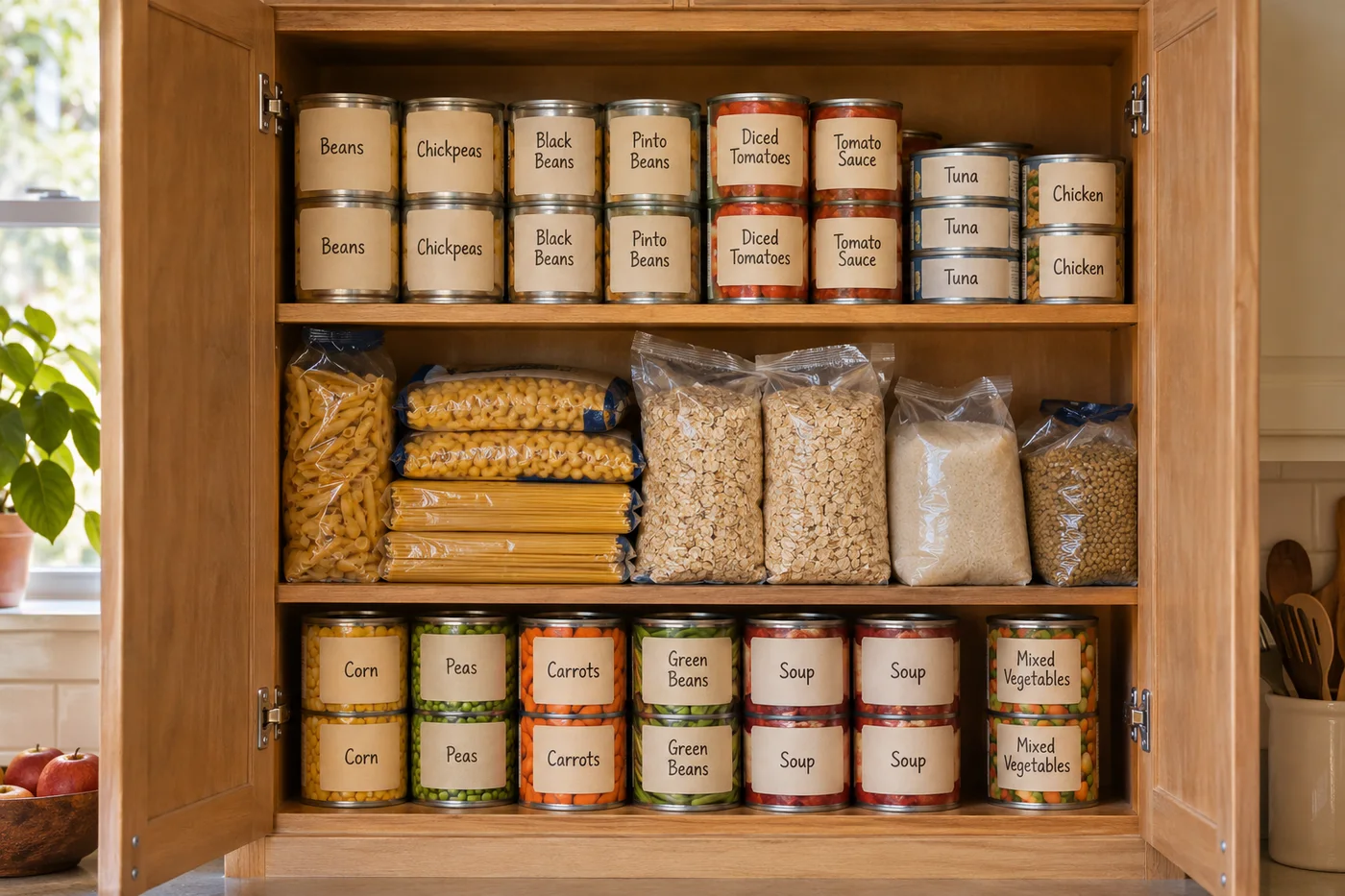
Start your two-week pantry with meals your family already eats. Write down fourteen days of meals, count what’s on the shelf, and buy what’s missing a little at a time. Include food you can eat without cooking, drinking water, and a manual can opener. If money is tight, finish buying one dinner first.
Use two weeks as your starting goal. Count complete meals so you can see how many days your food will cover.
Count meals before buying more food
Write down seven ordinary dinners. Keep the simple ones: beans and rice, pasta with sauce, or soup and crackers. Repeat that week if your household is happy to eat it twice. Then add breakfasts, lunches, snacks, and drinks.
For each meal, list the package quantities you actually use. Say your family uses two cans of beans for dinner. Four of those dinners would take eight cans. If three suitable cans are already on the shelf, the gap is five. Use the label as a starting point, then allow for how much your family eats.
Check what else each meal needs. Pasta needs cooking water and heat. Cereal may need milk. An electric can opener needs power. Mark any meal that would fail if one of those were unavailable.
Keep a separate no-cook row
After a layoff, you’ll usually still have a working kitchen. During a power outage, you may need a meal you can open and eat. Put a few suitable options on the list: ready-to-eat canned beans, crackers, fruit cups, nut butter if safe for your household, and other foods labeled ready to eat.
USDA explains that shelf-stable means a product can be stored safely at room temperature before opening; some cans still require refrigeration. Check the storage directions on the label. Follow the instructions after opening, too. USDA guidance.
Buy the gaps in an order you can afford
Choose one complete dinner to finish first. Add its missing ingredients to your normal shopping list, then work on breakfast or lunch. This avoids a shelf full of rice with nothing planned to go with it.
Keep food allergies, texture preferences, and prescribed diets in the plan. Include a suitable meal for each person. Ask their clinician or dietitian about substitutes when a medical diet makes storage difficult.
Water deserves its own line. CDC recommends at least one gallon per person per day for three days and suggests working toward two weeks when possible. Some households need more. CDC water guidance.
Printable pantry check
- Write seven dinners and decide which to repeat.
- Add breakfast, lunch, snacks, and household dietary needs.
- Count usable packages already at home.
- Mark meals that require heat, refrigeration, or extra water.
- Choose the first complete meal to finish buying.
- Put new purchases behind older stock.
- Set a date to check the shelf again.
Equipment worth checking first
Check the kitchen drawers before ordering gear. A working manual can opener is more useful here than a matching set of storage jars. An ordinary notebook works for your food list. If you do buy containers, measure the shelf and package first; moving every unopened food into a new container adds cost and work.
After your first week using the pantry, cross out meals nobody wanted and correct the quantities. Keep the revised grocery list with the food. Update it around the dinners your family wants to eat.
Manual can openers: good, better, best
Choose the opener that fits your grip and the way you use the kitchen.
We may earn a commission from these links, at no extra cost to you. As an Amazon Associate I earn from qualifying purchases.
Good — basic pantry tool
Better — cushioned grip
Best — side-cutting design
From the prepping community
The Provident Prepper puts it plainly: “Only fill your pantry with foods that you include in your regular diet.” Read the food-storage guide.
Sources
Watch and learn
How to easily build a 2 week emergency food supply
From City Prepping
Frequently asked questions
- What food should I start with?
- Start with foods your family eats each week. Count complete meals, add food you can eat without cooking, and follow each package’s storage directions.