
Car emergency kit checklist for breakdowns and accidents
Pack a car kit for a breakdown or delay. Check phone power, lights, water, warmth and first-aid supplies with this printable list.
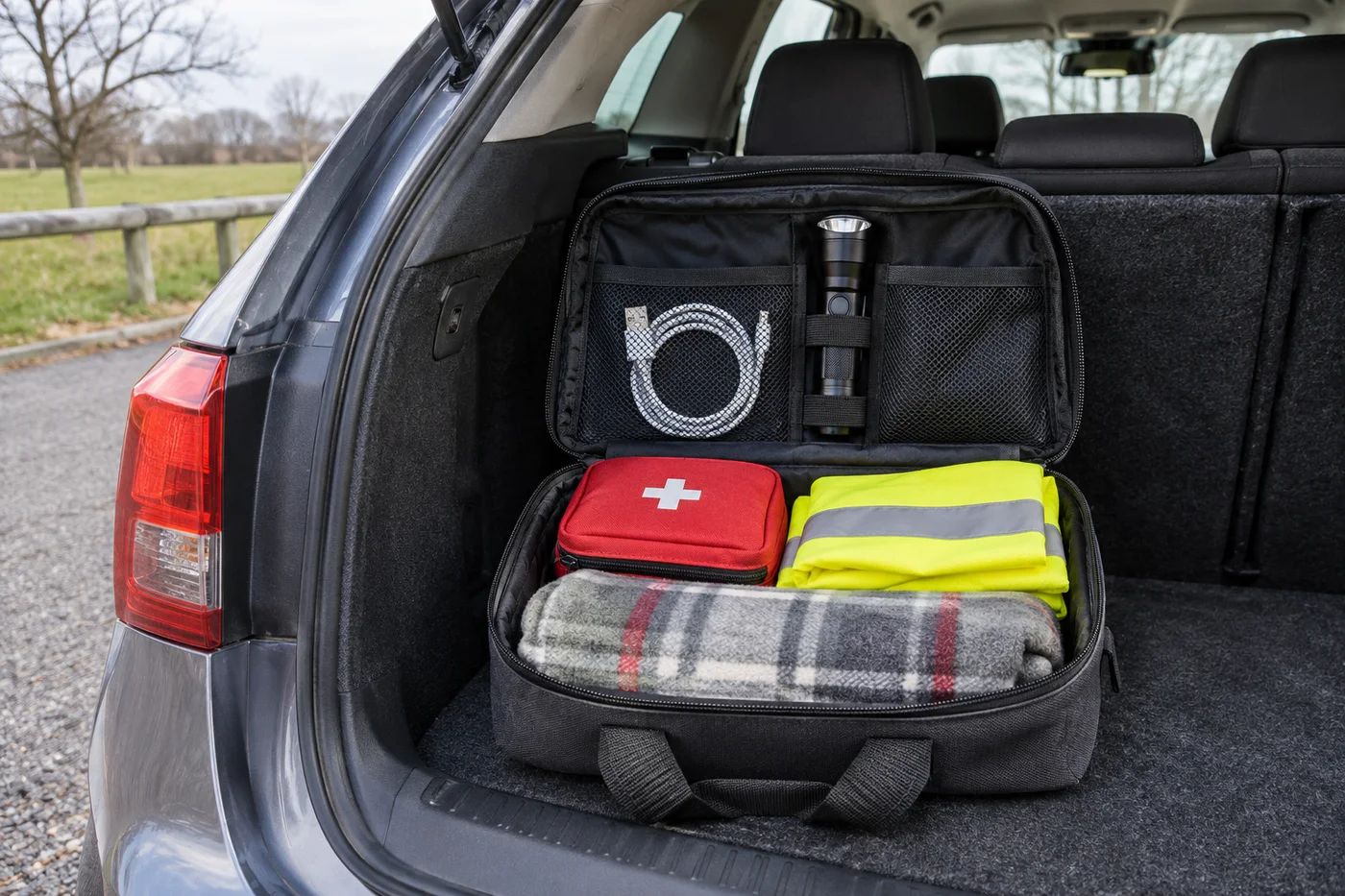
Pack your car for a long wait. Start with a phone charger, flashlight, water, first-aid supplies and clothes for the weather. Keep the things you’ll need first within reach. A kit should help you call for help and wait safely when a trip goes wrong.
An accident and a breakdown are different situations. If someone is injured or the vehicle is in a dangerous position, contact emergency services and follow the dispatcher’s directions. Stay clear of moving traffic.
Pack for the people who ride with you
Think about a short trip that turns into a long wait. Would someone need warm clothing, a snack they can eat, glasses, a cane, walker or other aid, or a way to reach a caregiver? Write those needs down before buying a premade kit.
Keep medicine according to its storage instructions. A car can get much hotter or colder than a home; ask the pharmacist about a travel plan instead of leaving a permanent supply in the glove box.
NHTSA’s roadside guidance includes a phone and charger, flashlight, first-aid kit, water, food, and basic roadside equipment. Use it to check your list, then add what your passengers and car need. NHTSA road-trip preparation.
Keep the first things you need close by
Put a paper contact card and the insurer’s claims contact with your vehicle information. Keep sensitive records out of view. Check that your phone cable actually charges from the car’s outlet.
Before relying on a roadside tool, read its instructions and learn how to use it safely. Don’t assume carrying jumper cables makes every battery problem safe to handle, particularly with hybrid or electric vehicles. Your owner’s manual and roadside-assistance service are the right starting points.
Printable car-kit check
- Phone charger fits the vehicle and the phone.
- Paper emergency and roadside-assistance contacts are current.
- Flashlight works and is easy to reach.
- Warm layer and blanket suit the season.
- Water and snacks suit the passengers.
- First-aid supplies are present and not past their use-by dates.
- Glasses, mobility and care needs have a travel plan.
- Vehicle tools match the owner’s manual and the driver’s ability.
- The bag is secured so it will not become loose cargo.
Check access before the next trip
Sit in the parked car and locate the charger, contact card, and flashlight. Have another regular driver try. Move anything that takes several minutes to find.
Check the kit when the season changes and before a longer trip. Replace used supplies and remove anything that has been damaged by heat, freezing, or leakage.
Headlamps: good, better, best
A headlamp keeps your hands free. Choose the power setup you can keep ready.
We may earn a commission from these links, at no extra cost to you. As an Amazon Associate I earn from qualifying purchases.
| Pick | Product and why it fits | Amazon |
|---|---|---|
| Good — replaceable batteries | Energizer Vision HD+ Headlamp — Runs on three AAA batteries and frees both hands for chores. Details | Find on Amazon |
| Better — storage lockout | Black Diamond Spot 400 Headlamp — Adds a storage lockout and works with AAA batteries or a separately sold BD 1500 battery. Details | Find on Amazon |
| Best — rechargeable battery included | Petzl ACTIK CORE Headlamp — Includes a rechargeable CORE battery and also accepts three AAA batteries. Details | Find on Amazon |
From the prepping community
Cliff at The Urban Prepper describes his aim this way: “My goal is to make prepping approachable, non-paranoid, and actually useful.” About The Urban Prepper.
Sources
Watch and learn
10 Glove Compartment Essential Items | Vehicle Preps
From The Urban Prepper
Watch on YouTube · Playing loads YouTube’s video player.
Frequently asked questions
- Where should I put the car kit?
- Secure the main bag so it stays in place. Keep your phone charger, flashlight and paper contacts somewhere you can reach. Check access while the car is parked.