
Emergency contact card: a printable wallet template
Keep important numbers handy when your phone dies. Fill in this printable wallet card, check the numbers, and agree on a family contact plan.
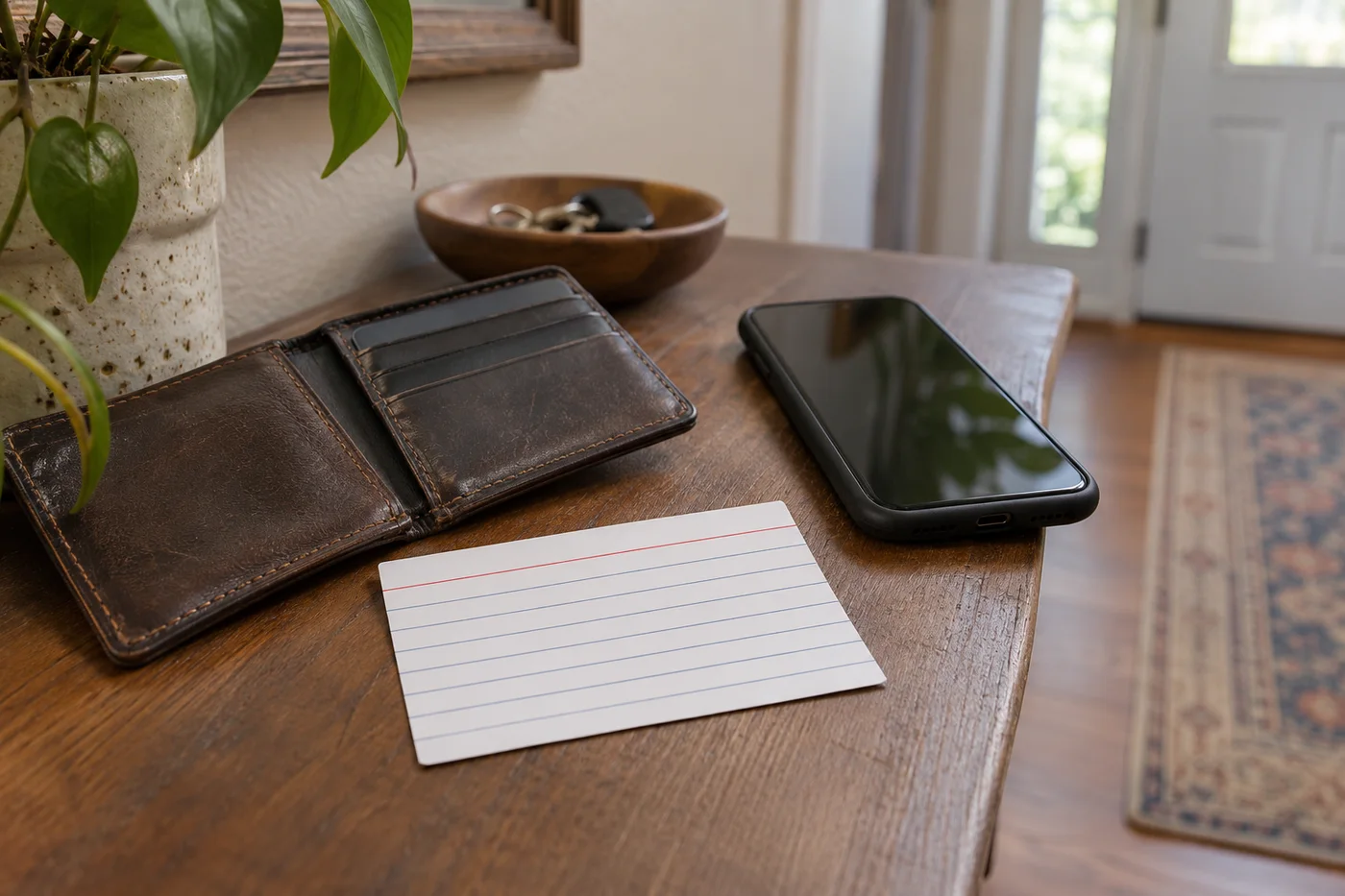
A dead phone shouldn’t leave you without a phone number. Write your main contact, a backup number and your agreed meeting place on a small card. Include area codes and the date you checked it. Keep door codes and other private details off a card you could lose.
Keep the card short enough to read quickly. Keep the card focused on contacts and the meeting plan.
Pick people who can help
List your first person to call, a backup, and someone outside your area who has agreed to help if useful for your plan. Ask those people whether they’re willing to take messages and relay information.
For a child, check the card with their caregiver and school. Include only information appropriate for the child’s age and situation. Don’t put a door code, alarm code, or a detailed schedule on a card that could be lost.
Ready.gov has a printable family communication card that includes contact and meeting information. It can serve as a starting format. Ready.gov family card.
Fill in this card
| Field | Your information |
|---|---|
| Name or family name | ___ |
| Primary contact and number | ___ |
| Backup contact and number | ___ |
| Agreed message contact | ___ |
| Meeting location, if safe to use | ___ |
| Updated on | ___ |
Use large enough print that the person carrying it can read it. Include area codes. If someone has trouble reading, hearing or using the card, work out another way they can get help. Use a language they understand.
Try it without your contact list
Using the card, ask each person to identify whom they would contact first and what they would say. Adults can make an ordinary test call to the agreed contact after telling them it’s a drill. Don’t call an emergency number just to test the card.
Check the number on the paper against the number that actually worked. A saved name on a phone can hide an old or mistyped number.
Where copies go
Keep a copy in a wallet or another place the person normally carries. Put a household copy where appropriate caregivers can find it. Decide together whether an extra copy belongs in a school bag or care folder.
When a number changes, replace every copy. Write the update date on the new card and remove the old one. A familiar-looking card with an old number is easy to trust by mistake.
Useful gear for this job
Use what you already own, then fill the gaps that matter for this plan.
We may earn a commission from these links, at no extra cost to you. As an Amazon Associate I earn from qualifying purchases.
| Pick | Product and why it fits | Amazon |
|---|---|---|
| Backup contact notes | Rite in the Rain No. 135 Pocket Notebook — A small weather-resistant notebook for contacts and notes on the go. Details | Find on Amazon |
| Household copy of the plan | Avery Durable View Binder, 1-inch — Holds printed worksheets and household instructions together. Details | Find on Amazon |
Sources
Watch and learn
Print ALL of Your Contacts on Paper | Emergency Backup
From The Urban Prepper
Watch on YouTube · Playing loads YouTube’s video player.
Frequently asked questions
- What belongs on a child’s contact card?
- Choose the contacts with the child’s caregiver and school. Use clear print, include area codes, and match the card to the school’s pickup rules and the child’s needs.