
Emergency binder checklist for your household
Make an emergency binder someone else can use. Start with contacts, care tasks and pet needs, then list where important records are kept.
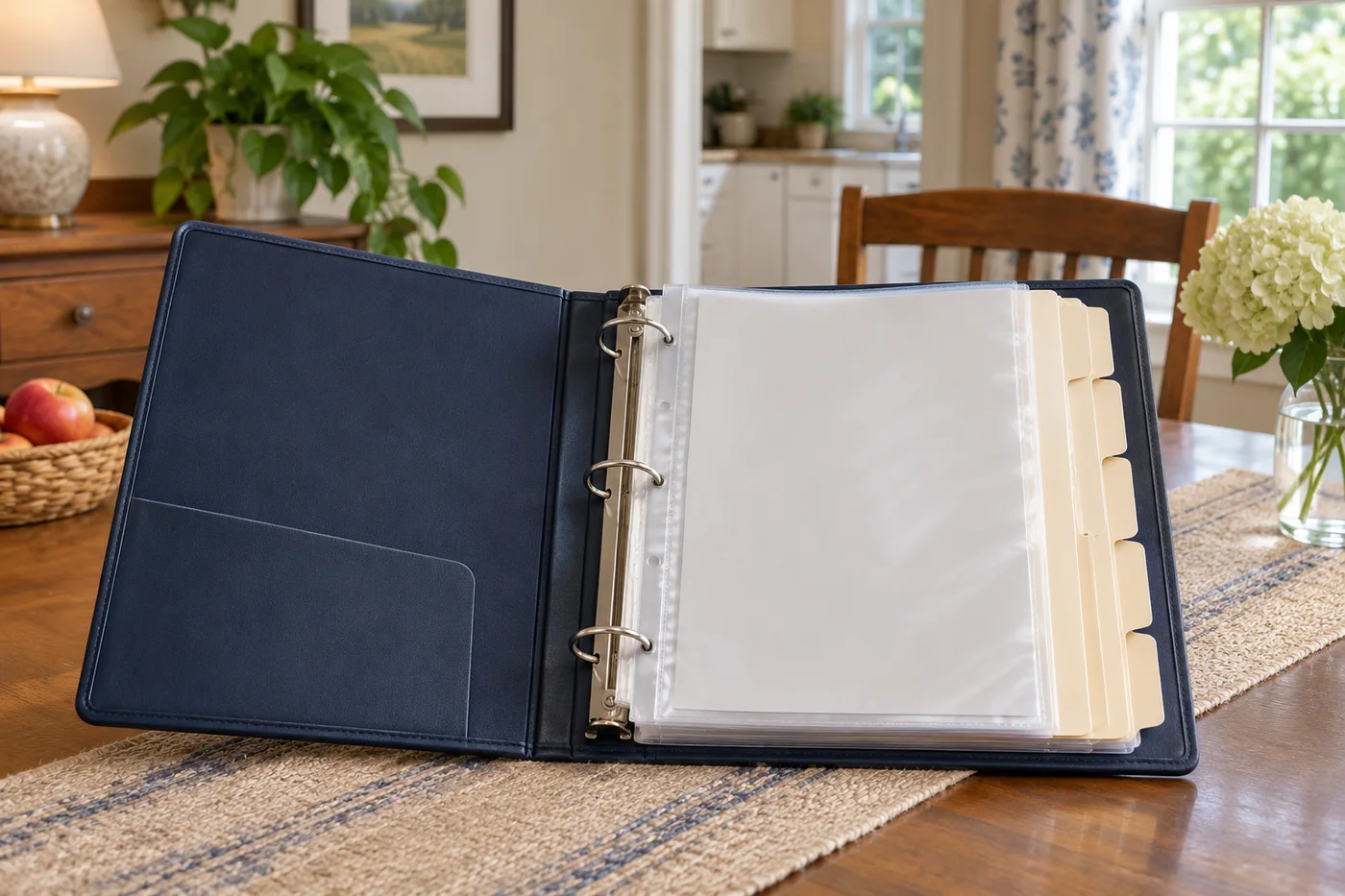
If you couldn’t get home tonight, could someone else handle the basics? An emergency binder should show whom to call, who can pick up the kids, what the pets need, and where to find important papers. Start with one useful page. Keep private records locked away and share only what your helper needs.
Put the jobs that can’t wait on the first page. You can add the rest later.
Put the next few hours on the first page
Write who should be contacted, who has agreed to help, and what is likely to need attention today. Include children, dependent adults, pets, and any household job that can’t wait.
Ask before naming someone as a backup. Write down the jobs they have agreed to handle. School pickup permission and access to accounts or medical decisions may need separate arrangements.
A first page might have these fields:
| Task | First person to call | Backup | Where to find instructions |
|---|---|---|---|
| Child or dependent care | ___ | ___ | ___ |
| Pets | ___ | ___ | ___ |
| Urgent household contact | ___ | ___ | ___ |
| Important appointment | ___ | ___ | ___ |
List where the private papers are kept
Use the binder to show where records are stored and who can lawfully access them. You don’t need to put every account number, identity document, or password in a folder carried around in a car.
The Consumer Financial Protection Bureau (CFPB) recommends organizing important financial and personal documents and keeping protected backup copies. Its resource links to FEMA’s Emergency Financial First Aid Kit for a fuller inventory. Document preparation guidance.
Keep the page for your helper separate from highly sensitive records. Share only the information a helper needs. Review access after relationships, caregivers, or living arrangements change.
Keep medical contacts and instructions handy
Record the location of a current medication list, allergies, clinicians, and pharmacy details. Ask the relevant clinician to confirm care instructions. Use the care team’s instructions for medicine and treatment.
If someone will need to make decisions for you, ask a qualified professional which documents and permissions they need.
Try a ten-minute handoff
Give a trusted adult the page meant for helpers and ask them to find the next school pickup, the emergency contact, and one household instruction. Note what they can’t find or don’t understand. Fix those points before adding more pages.
Date the front page. Review it after a move, school change, new prescription, or change in who can help. Keep an old copy clearly marked as outdated so it can’t be mistaken for the current plan.
Paper storage: good, better, best
Choose by the job: organizing working copies, protecting small records, or storing a larger set of documents.
We may earn a commission from these links, at no extra cost to you. As an Amazon Associate I earn from qualifying purchases.
| Pick | Product and why it fits | Amazon |
|---|---|---|
| Good — working papers | Avery Durable View Binder, 1-inch — Holds printed worksheets and household instructions together. Details | Find on Amazon |
| Better — compact rated chest | SentrySafe H0100 Fire and Water Chest — A compact chest with maker-listed fire and water protection. Check that your papers fit. Details | Find on Amazon |
| Best — room for more documents | SentrySafe CHW30220 Document Chest — A larger document chest with fire and water ratings listed by the maker. Plan for its weight. Details | View on Amazon |
Sources
Frequently asked questions
- What goes on the first page of an emergency binder?
- List whom to call and the jobs that need doing today. Include people who have agreed to help, pickup arrangements, pet care and where to find care instructions.