
Important documents checklist for household emergencies
Find and protect your important papers. Use this checklist for IDs, insurance, accounts and legal records, plus questions about wills and trusts.
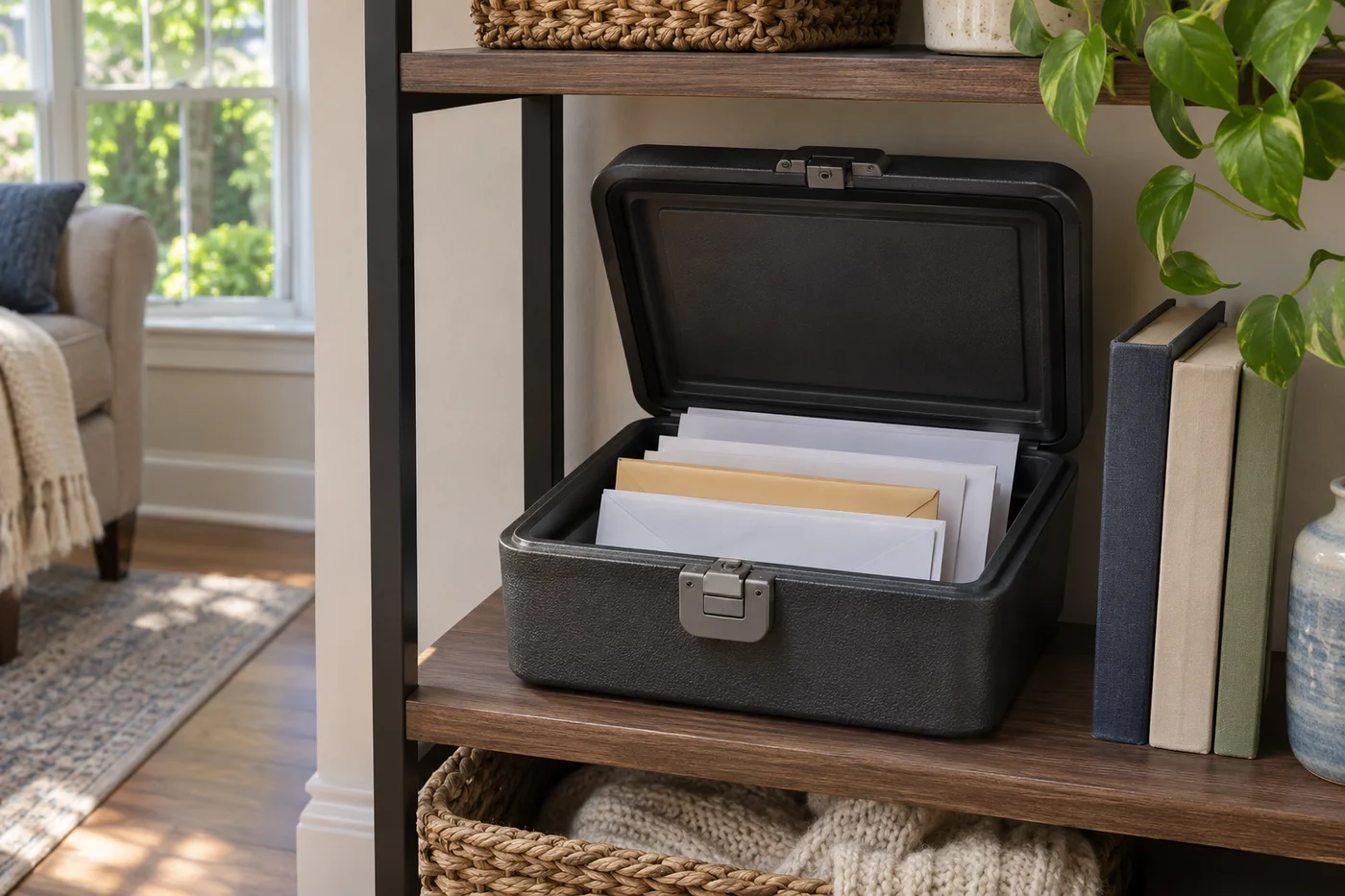
Make a list of your important papers and where to find them. Include ID records, insurance, house and car papers, account details, legal documents and medical information. Note where you keep originals and backup copies. Mark anything that’s missing so you know what to track down next.
Someone else may need to find these records when you can’t help them. That could be a house fire, a sudden hospital stay, or the death of the person who usually handles the paperwork.
Write down where each paper is kept
Use one row per record. For each record, write its location or the next step to get a copy.
| Record | Original location | Protected copy | Who knows how to access it? |
|---|---|---|---|
| ID, birth and marriage records | ___ | ___ | ___ |
| Insurance policies and contacts | ___ | ___ | ___ |
| Housing and vehicle records | ___ | ___ | ___ |
| List of bank and other accounts | ___ | ___ | ___ |
| Wills, trusts and papers naming decision-makers | ___ | ___ | ___ |
| Current medical information | ___ | ___ | ___ |
The CFPB’s emergency-preparation guidance includes identity, financial, property, medical, and legal records. Use its list as a cross-check after your first pass. CFPB document guidance.
Write down questions about wills and trusts
If you already have a will, trust, power of attorney, or health-care directive, note the document date and the professional who prepared it. Use your list to prepare questions for an estate-planning professional.
Questions for a qualified professional might include:
- Which documents fit our family and state?
- Who should know where signed originals are kept?
- Have family changes or a move made existing documents outdated?
- If we have a trust, what still needs to be done to carry out its instructions?
- Do the people named to receive our accounts match the rest of our plan?
Ask an estate-planning professional which papers fit your family and whether your existing documents still do what you need.
Test the backup
Open a saved file and confirm it’s readable. Check both sides of a document when relevant. Verify that the person who may need a record has an appropriate way to locate it without giving broad access to everything.
Store copies securely and separately from originals where appropriate. Ask the bank, agency or other organization whether it needs an original or accepts a copy.
Your next paperwork session
Choose one missing record and write down how to request it. Choose one professional question and schedule the conversation. Keep the rest on your list. You can make the folder useful while you work through the bigger questions.
Paper storage: good, better, best
Choose by the job: organizing working copies, protecting small records, or storing a larger set of documents.
We may earn a commission from these links, at no extra cost to you. As an Amazon Associate I earn from qualifying purchases.
| Pick | Product and why it fits | Amazon |
|---|---|---|
| Good — working papers | Avery Durable View Binder, 1-inch — Holds printed worksheets and household instructions together. Details | Find on Amazon |
| Better — compact rated chest | SentrySafe H0100 Fire and Water Chest — A compact chest with maker-listed fire and water protection. Check that your papers fit. Details | Find on Amazon |
| Best — room for more documents | SentrySafe CHW30220 Document Chest — A larger document chest with fire and water ratings listed by the maker. Plan for its weight. Details | View on Amazon |
Sources
Watch and learn
Emergency Documents Backup | USB Folder Structure Template
From The Urban Prepper
Watch on YouTube · Playing loads YouTube’s video player.
Frequently asked questions
- Where do wills and trusts fit in the file?
- Record the date and location of signed documents and who prepared them. Ask an estate-planning professional which documents fit your family and state, and what needs updating.