
Winter car emergency kit for delays and getting stranded
Pack for a winter road delay with blankets, warm clothes and car supplies. Check your route and print the winter-trip checklist.
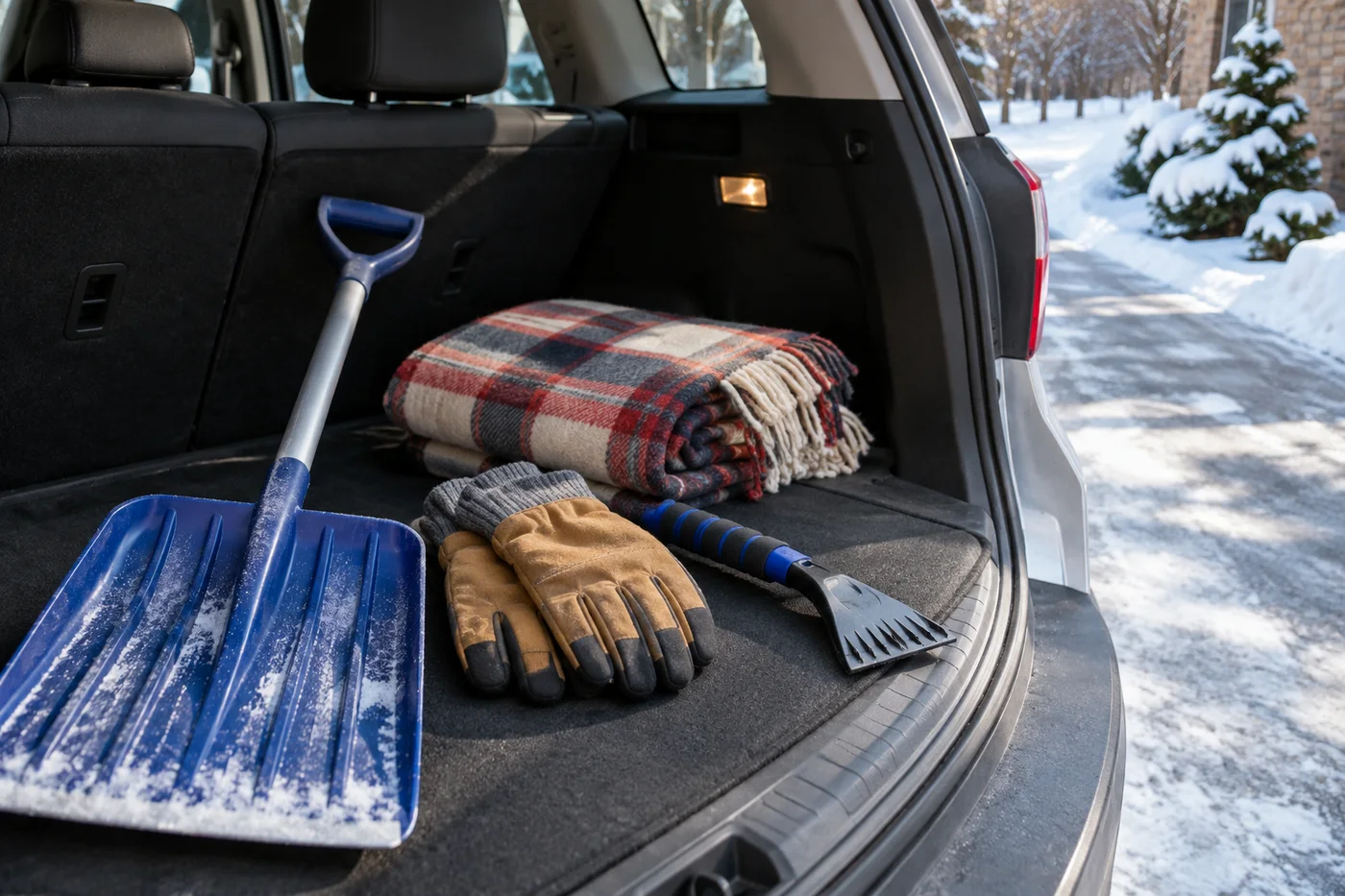
Add warm clothes, blankets, a shovel and an ice scraper to your car kit before winter hits. Pack enough for everyone riding with you. Check the roads before leaving and tell someone when you expect to arrive. If the trip can wait and the roads are bad, stay put.
Choose equipment you can lift and use. A heavy shovel or a bag buried beneath luggage is little help to someone with limited strength or mobility.
Check the roads before you load up
Look up official weather and road information for the whole route. Check each mountain pass and rural road along the way. Agree on what happens if the trip is delayed and when someone should check in.
Keep the vehicle maintained and follow the winter advice in its manual. Electric vehicles and fuel-powered vehicles have different limits and charging or fueling needs; use the owner’s manual for your vehicle.
Add supplies for a longer wait
NHTSA recommends winter items such as a shovel, scraper, traction material such as sand, blankets, water, food, and a phone charger. Keep footwear and gloves available for anyone who may need to leave the vehicle under safe conditions. NHTSA winter-driving guidance.
Store food and water in suitable containers and check them after extreme temperatures. Ask your pharmacist or care team how to handle medicine and medical gear during a long delay. Don’t count on the car to keep everything running.
If you become stranded
Call for help and give your location as clearly as possible. Follow local instructions. NHTSA generally advises staying with the vehicle during a winter emergency and avoiding work that leaves you exhausted. It also warns to keep snow clear of the exhaust pipe to reduce carbon monoxide danger. Read its full instructions before travel; changing conditions can make a particular location unsafe.
Don’t use a portable fuel-burning heater, grill, or camp stove inside the vehicle. Tell the dispatcher about medical needs and any danger at your location.
Printable winter-trip check
- Checked official weather and road conditions.
- Shared route, arrival estimate and check-in plan.
- Checked fuel or charge and planned suitable stops.
- Packed warm layers, gloves and blankets for each passenger.
- Added scraper, suitable shovel and vehicle-appropriate supplies.
- Charged the phone and checked its cable.
- Planned for medicine, walking aids and care needs.
- Kept essential items reachable and secured.
After a delayed trip, write down what you used and what was missing. Fix that short list before putting the kit back in the car.
Useful gear for this job
Use what you already own, then fill the gaps that matter for this plan.
We may earn a commission from these links, at no extra cost to you. As an Amazon Associate I earn from qualifying purchases.
| Pick | Product and why it fits | Amazon |
|---|---|---|
| Full-size warmth layer | Arcturus Military Wool Blanket — A full-size blanket for a car or home kit. Allow space for it in your bag. Details | Find on Amazon |
| Compact reflective layer | SOL Emergency Blanket — A compact reflective layer to keep with warm clothing and a proper blanket. Details | Find on Amazon |
| Hands-free light | Energizer Vision HD+ Headlamp — Runs on three AAA batteries and frees both hands for chores. Details | Find on Amazon |
Sources
Frequently asked questions
- What should I add to my car kit for winter?
- Add warm layers, gloves and blankets for each passenger, plus a scraper, a shovel you can handle, and suitable traction supplies. Check food, water, phone power and your route before travel.