
Power Outage Supplies: Home Emergency Kit Checklist
Get your home ready for a power outage. Check lights, phone backup power, food, water and medical needs with this printable checklist.
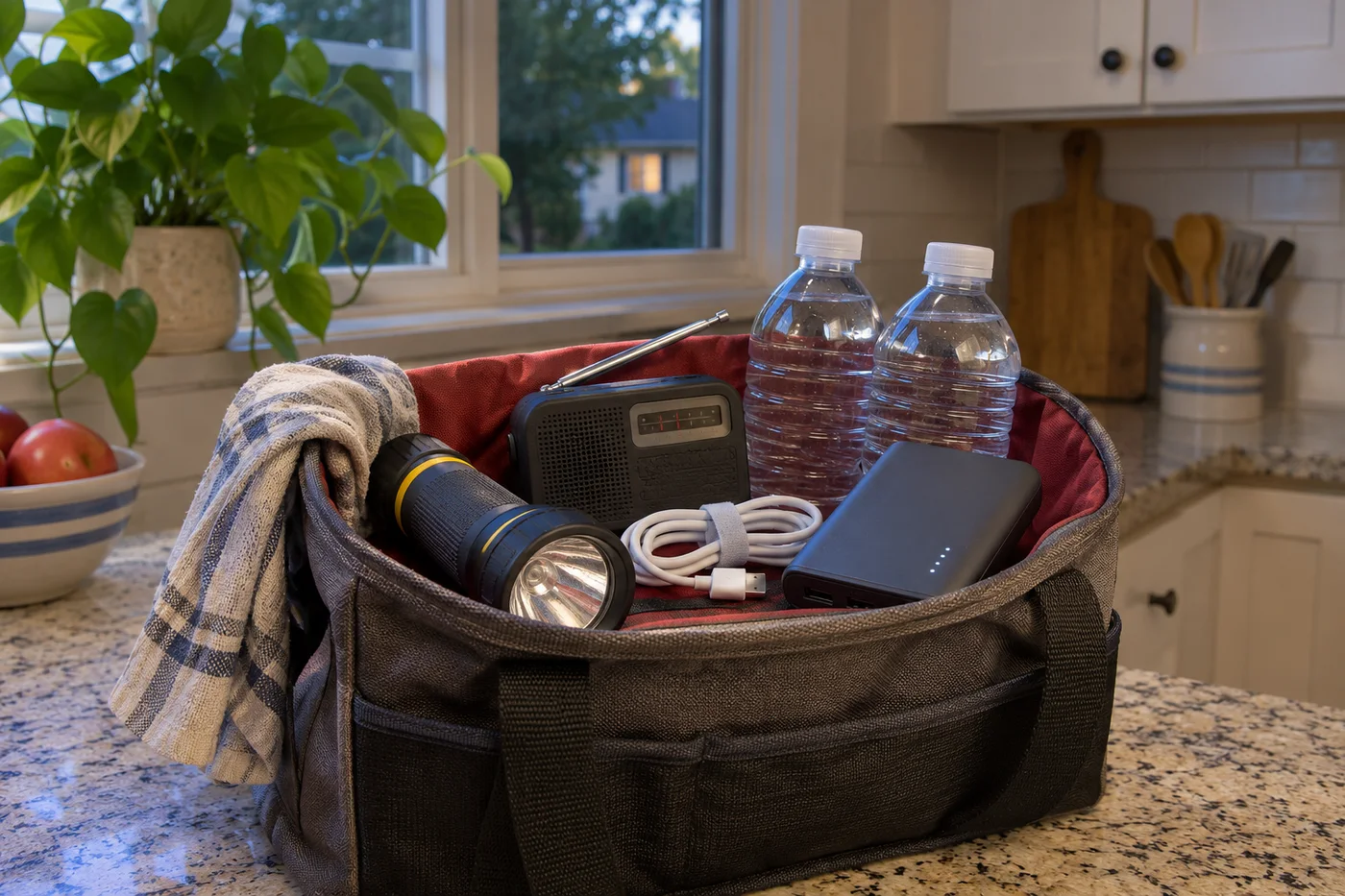
Keep a flashlight where you can find it in the dark. Put phone backup power, water, ready-to-eat food, a manual opener and paper contacts nearby. If someone needs powered medical gear or medicine that must stay cold, make a separate plan with their care team before the lights go out.
Have somewhere else to go if home becomes unsafe. Follow evacuation orders. Leave sooner if someone needs care or equipment you can’t safely provide there.
Plan for medical needs first
If someone uses powered medical equipment or medicine that must stay within a set temperature range, ask their clinician, pharmacist, or equipment supplier for a written outage plan. Include backup requirements and when to seek another location. Don’t assume a consumer power bank can run medical equipment.
Save the number or website for reporting a power outage and your local emergency information sources. Record the outage start time when you know it.
Put the ordinary supplies together
Keep a flashlight or suitable battery light where you can find it in darkness. Check the batteries or charge according to the manufacturer’s directions. Keep a compatible charging cable with a charged phone power bank and make sure they work together.
Add drinking water, a few ready-to-eat meals, a manual opener where needed, and basic cleanup supplies. Keep a paper contact card with them. Use your household’s existing equipment first.
Leave refrigerator doors closed
FoodSafety.gov advises keeping refrigerator doors closed as much as possible. Its outage chart explains when to discard food, including refrigerated perishables after four hours without power. Never taste food to decide whether it’s safe. Keep a saved or printed copy of the chart. FoodSafety.gov outage guidance.
Keep generators and grills outside
CDC warns against running generators or fuel-burning devices inside a home, garage, or carport. Keep generators outdoors, at least 20 feet from doors, windows, and vents, following the manufacturer’s instructions and keeping exhaust away from openings. Have working carbon monoxide alarms. CDC carbon monoxide guidance.
A generator purchase needs a separate safety and installation plan. Learn how to use it safely before the lights go out.
Printable outage check
- Household medical and temperature-related needs have a plan.
- Flashlights work and are easy to find.
- Phone backup power and cables have been checked.
- Water and a no-cook meal are available.
- Utility and family contacts are on paper.
- Food-safety guidance is saved for offline use.
- Smoke and carbon monoxide alarms are maintained.
- We know when and where we would leave if the home becomes unsafe.
After power returns, recharge equipment and replace used supplies. Write down the item or instruction you could not find; then fix that problem before the next outage.
Headlamps: good, better, best
A headlamp keeps your hands free. Choose the power setup you can keep ready.
We may earn a commission from these links, at no extra cost to you. As an Amazon Associate I earn from qualifying purchases.
Good — replaceable batteries
Better — storage lockout
Best — rechargeable battery included
Sources
Watch and learn
My Hyper-Organized Power Outage Kit (Ready for Any Blackout)
From The Urban Prepper
Frequently asked questions
- How do I plan backup power for medical equipment?
- Ask the equipment supplier and care team for the power requirements and a written outage plan. Include how long the backup lasts and when to move to a place that can provide care.