
Two-week pantry shopping list: a printable meal worksheet
Turn fourteen days of meals into a grocery list. Use this printable worksheet to count packages, check your pantry, and buy what you need.
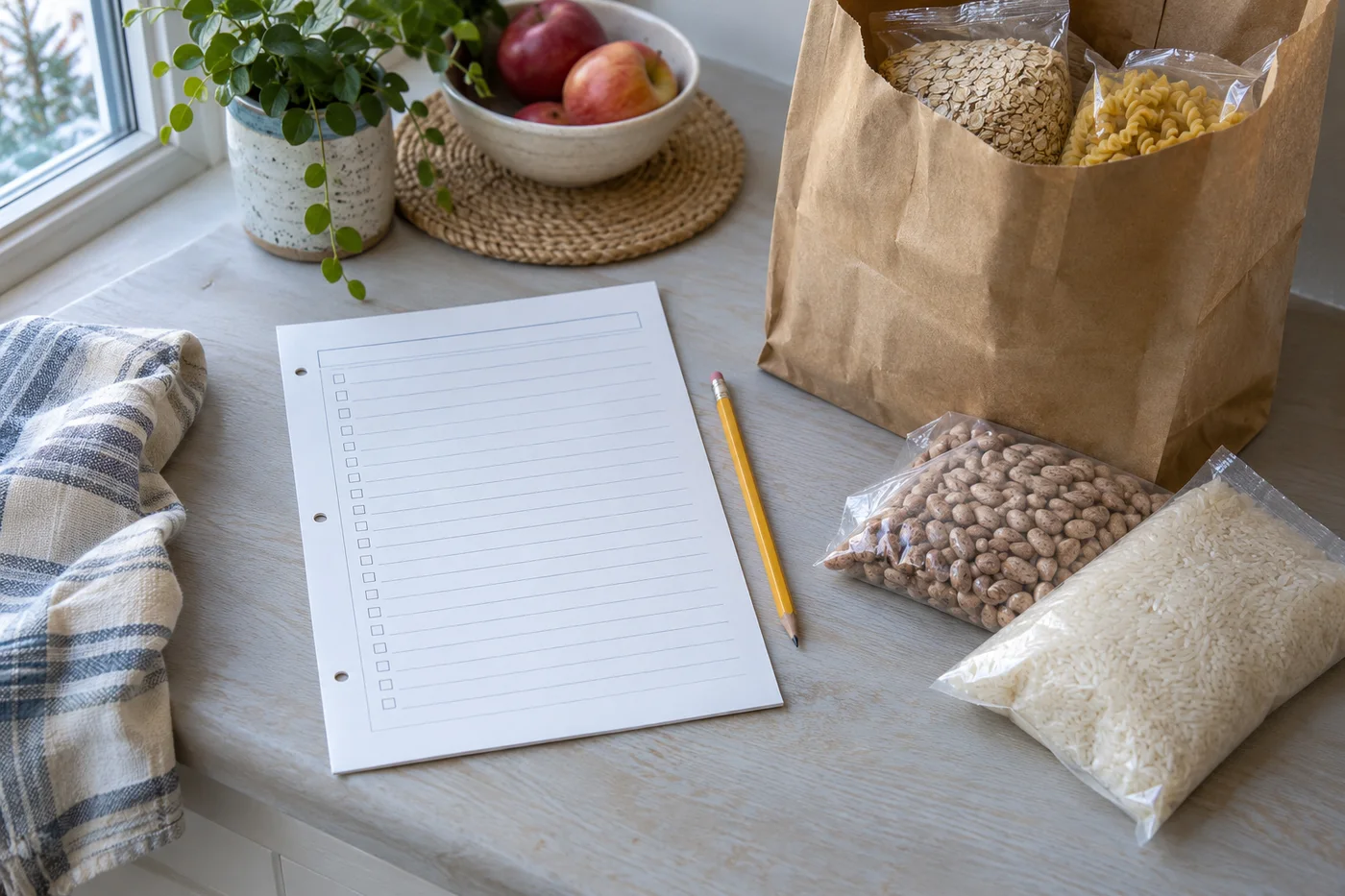
Write down fourteen days of meals before you head to the store. Count the food you already have, then list what you still need. This worksheet helps you turn that meal plan into a shopping list. Fill in your own amounts so it fits the people you’re feeding.
Count work and school lunches too. If money gets tight, you may need to pack those meals at home.
Turn a menu into package counts
Make one row for each ingredient. Write down how many packages your meals need. Subtract the good packages you already have. That’s how many to buy. If you have enough, put zero in the last column.
| Ingredient | Meals using it | Packages needed | Already here | Buy |
|---|---|---|---|---|
| Beans | ___ | ___ | ___ | ___ |
| Rice or other grain | ___ | ___ | ___ | ___ |
| Soup or a ready-to-eat main | ___ | ___ | ___ | ___ |
| Breakfast food | ___ | ___ | ___ | ___ |
| Fruit and vegetables | ___ | ___ | ___ | ___ |
| Household-specific item | ___ | ___ | ___ | ___ |
Work from the quantity you normally cook. If you don’t know whether one package feeds everyone, make that meal before buying fourteen days of it. Keep the receipt and jot down how much remained.
Give missing ingredients their own check
Read the meal list as though you were making dinner tonight. Is there cooking oil? Does a packet require milk? Will a jar of sauce cover the amount of pasta you listed? Does anyone need a different version because of an allergy?
Don’t forget food for pets. Give their usual food its own line on the list.
Check every unfamiliar package for storage and preparation directions. USDA notes that some canned products require refrigeration. Shelf-stable food guidance.
Split the list into shopping trips
Mark the ingredients that complete meals you’re already close to having. Buy those first. On the next trip, add another meal or fill a breakfast gap.
Write a spending limit at the top of the list before you leave. If prices are higher than expected, save the rest for another trip. Buying a little less is better than putting groceries on a payment plan you can’t manage.
Printable shopping-trip check
- Counted unopened, usable food before shopping.
- Included all meals normally eaten away from home.
- Checked dietary needs and pet food.
- Listed cooking ingredients, not just main foods.
- Chosen meals that this trip will complete.
- Written a spending limit: $____.
- Put the receipt with the worksheet to update prices.
When you unpack, update the “already here” column. That way, the next list starts with the food actually on the shelf.
Useful gear for this job
Use what you already own, then fill the gaps that matter for this plan.
We may earn a commission from these links, at no extra cost to you. As an Amazon Associate I earn from qualifying purchases.
| Pick | Product and why it fits | Amazon |
|---|---|---|
| Printed meal plans | Avery Durable View Binder, 1-inch — Holds printed worksheets and household instructions together. Details | Find on Amazon |
| Grocery totals | Casio MS-80B Desktop Calculator — A desk calculator for checking bills, totals and job costs. Details | Find on Amazon |
Sources
Frequently asked questions
- How much food should I buy for each person?
- Use the portions your family eats and count how many times each meal appears on your plan. Try an unfamiliar meal once before buying enough for two weeks.